

Residential
Ceiling fan installation in the Phoenix Valley
Whether you are swapping an old fan, adding one where there is only a light, or hanging one on a covered patio, we mount it on a fan-rated box and wire the controls the way you want them.
Get a free estimate
Tell us what is going on and we will set up a time to look at it.
Or call 602-935-7971
- Fan-rated boxes on every install
- Damp- and wet-rated patio fans
- New locations wired from scratch
What's included
- A fan-rated box, replacing the old light box when needed
- Assembly, mounting and balancing of the fan
- New wiring and a wall switch for rooms with no ceiling fixture
- Damp- or wet-rated fans for covered and open patios
- Downrods and angled mounts for high and vaulted ceilings
- Wall controls, remotes or smart controls for the fan and light
- Removal of the old fan or fixture and cleanup
Why a fan needs a fan-rated box
A light fixture just hangs there. A ceiling fan spins, shakes a little, and puts a steady twisting load on whatever holds it up. Many ceiling boxes were installed for a light and are not rated to carry a fan.
When a fan goes up on a light-only box, the box can loosen over time, the fan starts to wobble, and in the worst case it can pull free. We check the box on every install. If it is not rated for a fan, we replace it with one that is, fastened to the framing or to a brace between the joists.
If a fan you already have wobbles, the box is one of the first things to check. Bent blade brackets, loose screws and blades that are out of balance are the others, and we look at all of them.
Adding a fan where there was no fixture
Many homes have bedrooms or living rooms with no ceiling fixture at all, just a switched outlet on the wall. Adding a fan there means running new wire from the switch, up through the attic, to a new fan-rated box in the ceiling.
In a single-story slab home, the attic makes this fairly direct. We find the center of the room, check for joists and ducts, and run the wire overhead. The switch that used to control an outlet can be rewired to run the fan, or we can add a new switch.
Rooms under a second floor take more planning, because there is no open attic above them. We look at the framing and give you an honest answer about what it will take before you commit.
Patio fans built for monsoon weather
Fans are rated for where they can go. A damp-rated fan is built for covered spaces that see humidity but stay out of direct rain. A wet-rated fan can handle water hitting it directly.
On paper, a covered patio only needs a damp-rated fan. In practice, monsoon storms push rain sideways under a lot of patio covers. If your patio is open on more than one side, a wet-rated fan is often worth it. Strong monsoon winds are another reason to choose a sturdy fan and mount it solidly.
Outdoor fans also collect the dust that haboobs leave behind. Wipe the blades after a big storm, and the fan will run quieter and stay balanced longer. The box and wiring on a patio need to be rated for the location too, and we seal every outdoor connection.
High and vaulted ceilings
Fans on tall or sloped ceilings need the right hardware. A downrod brings the fan down to a height where it moves air where people actually are. Vaulted and sloped ceilings need an angled mount rated for the pitch, or the fan will hang crooked and wobble.
Getting up there is half the job. Great rooms and entryways can call for tall ladders or scaffolding, and we bring the right equipment so nobody is balancing on furniture. On a high ceiling we make sure the box and the brace above it are solid before the fan goes up, because a wobble is much harder to fix later at that height.
If you are replacing a fan up high, a remote or wall control means you never need to reach for a pull chain again.
Wall controls, remotes and smart fans
How you control the fan depends on the wiring in the wall. If only one switched wire runs to the ceiling, the fan and light come on together from the wall switch, and you use a remote or pull chains to run them separately.
If you want separate wall controls for the fan and the light without a remote, the circuit needs an extra wire between the switch and the ceiling box. In a room with attic access, we can usually add it. Some fans also come with a wall-mounted control that works without new wiring.
Smart fan controls and app-connected fans add schedules and voice control. Like smart light switches, many need a neutral wire in the switch box. We check before you buy, so you get a control that works with your house.
When to install a ceiling fan
Spring is the best time. You get the fan up before the first hot stretch, and attic work for new fan locations is far more comfortable before summer sets in.
Summer installs are fine too. Swapping a fan on an existing fan-rated box usually takes no attic work at all, and for new locations that need attic wiring, we plan the work for early in the day. If a fan has started to wobble, rattle or hum, don't wait for the season to change. A loose fan on a light-only box is worth fixing now.
How it works
From the first call to a passed inspection.
01
Call or send plans
Call 602-935-7971, use the estimate form, or email drawings to contact@prcselectrical.com. We ask a few questions and set a time to look.
02
On-site visit
An electrician checks the panel, the service size, the circuits involved and what the utility or inspector will require.
03
Written flat price
You get the scope and the price in writing, including permits, before work starts.
04
Work and inspection
We work to your schedule, after hours when a business needs to stay open, pass inspection and walk you through the finished work.
Why people call Precise Electrical
The box gets checked every time
We never hang a fan on a box that is not rated for it. If the old box will not hold a fan, we replace it.
The right fan for the location
We help you choose damp- or wet-rated patio fans based on how exposed the spot really is during monsoon season.
Balanced before we leave
We assemble, hang and balance the fan, test every speed and the light, and show you how the controls work.
Questions about ceiling fan installation
Can I hang a ceiling fan where my light is now?
Usually, yes, as long as the box is rated for a fan. Many light boxes are not. We check the box, replace it with a fan-rated box fastened to the framing if needed, and reuse the existing switch wiring when it works for the controls you want.
How do I know if my ceiling box is fan-rated?
Look for a marking inside the box that says it is acceptable for fan support, and make sure the box is fastened solidly to the framing. If you cannot tell, turn off the breaker and leave it to us. We check the box on every fan we install.
What is the difference between damp-rated and wet-rated fans?
Damp-rated fans are for covered areas that stay out of direct rain. Wet-rated fans can handle water hitting them. In Phoenix, monsoon storms blow rain under many patio covers, so a wet-rated fan is often the safer pick for a patio that is open on more than one side.
Can you install a fan on a vaulted ceiling?
Yes. Sloped ceilings need an angled mount rated for the pitch, and often a longer downrod so the blades clear the ceiling. We bring ladders or scaffolding for high ceilings and make sure the box and brace are solid before the fan goes up.
Can I control the fan and light separately from the wall?
Yes, with the right wiring or controls. Separate wall controls need an extra wire between the switch and the ceiling box, which we can often add through the attic. If that is not practical, a remote or a fan with its own wall control can do the same job.
Why does my ceiling fan wobble?
Usually a loose mount, an unbalanced blade, or a box that is not rated for a fan. Tightening screws and balancing the blades fixes many wobbles. If the fan sits on a light-only box, or the box moves when you push on it, have it replaced before the fan works loose.
Do ceiling fans lower my electric bill?
They can help. A fan cools people, not rooms, so it lets you stay comfortable with the thermostat set a little higher. Any savings come from raising the thermostat, so turn fans off when you leave the room.
Other services
- Panel upgrades
- Electrical repair
- EV chargers
- Rewiring
- Lighting
- Outlets & GFCI
- Surge protection
- Backup power
- Safety inspections
- Emergency electrician
- Pool & spa
- Dental & medical
- Restaurants
- Retail build-outs
- Office electrical
- Industrial electrical
- Commercial electrical
- Build-outs & renovations
- Commercial lighting
- Electrical maintenance
The crew
Licensed electricians on every job
The electrician who looks at your job is qualified to do it. We photograph what we find and give you options when there is more than one good fix.
- Arizona ROC licensed and insured
- Photos and written findings on every job
- Permits and inspections handled
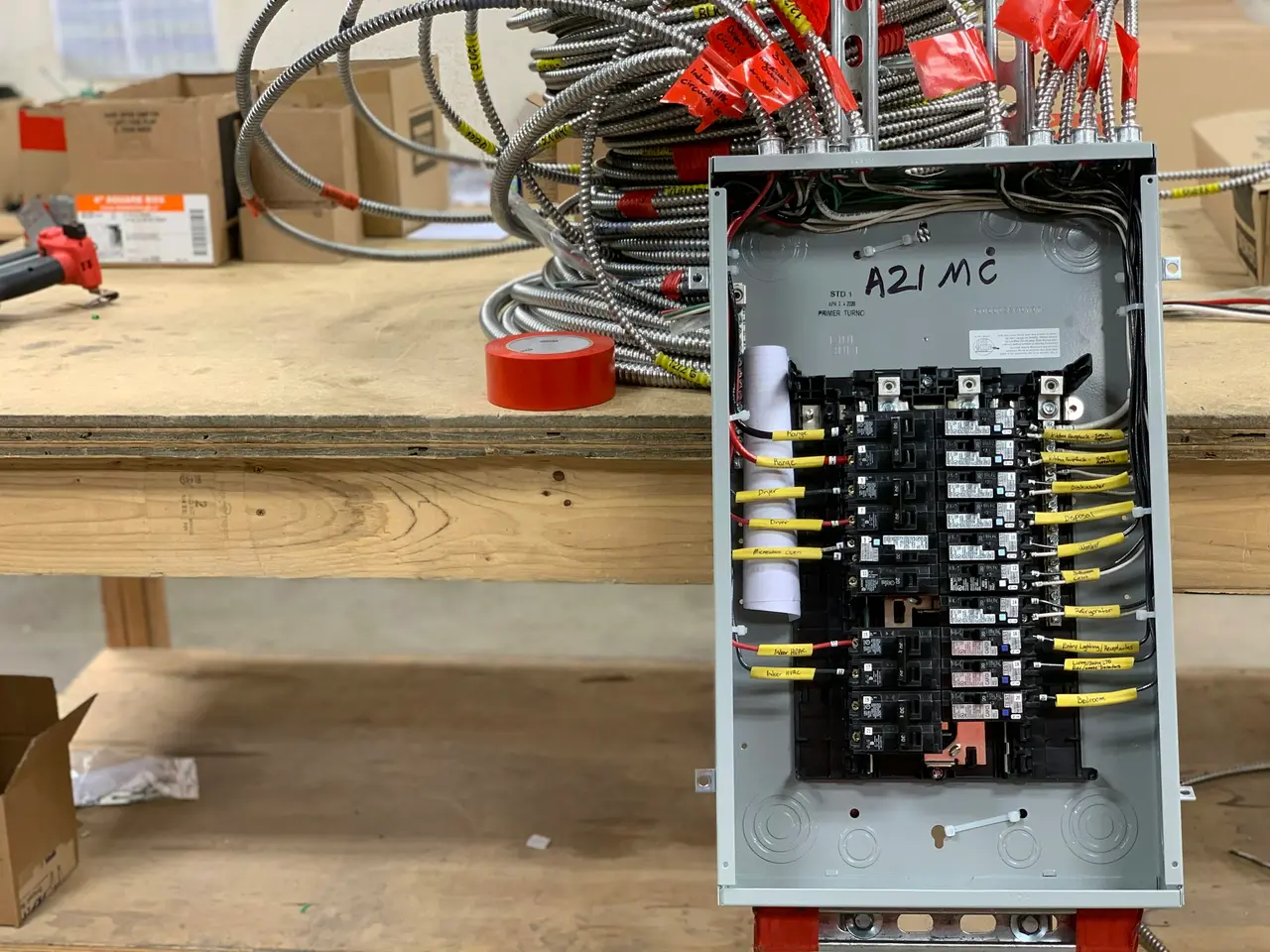
- Clean job sites and labeled panels
Arizona ROC License CR-11 #368777 · Look it up
Tell us what you need.
Free estimates, written flat-price quotes and permits handled, anywhere in the Valley.
602-935-7971