
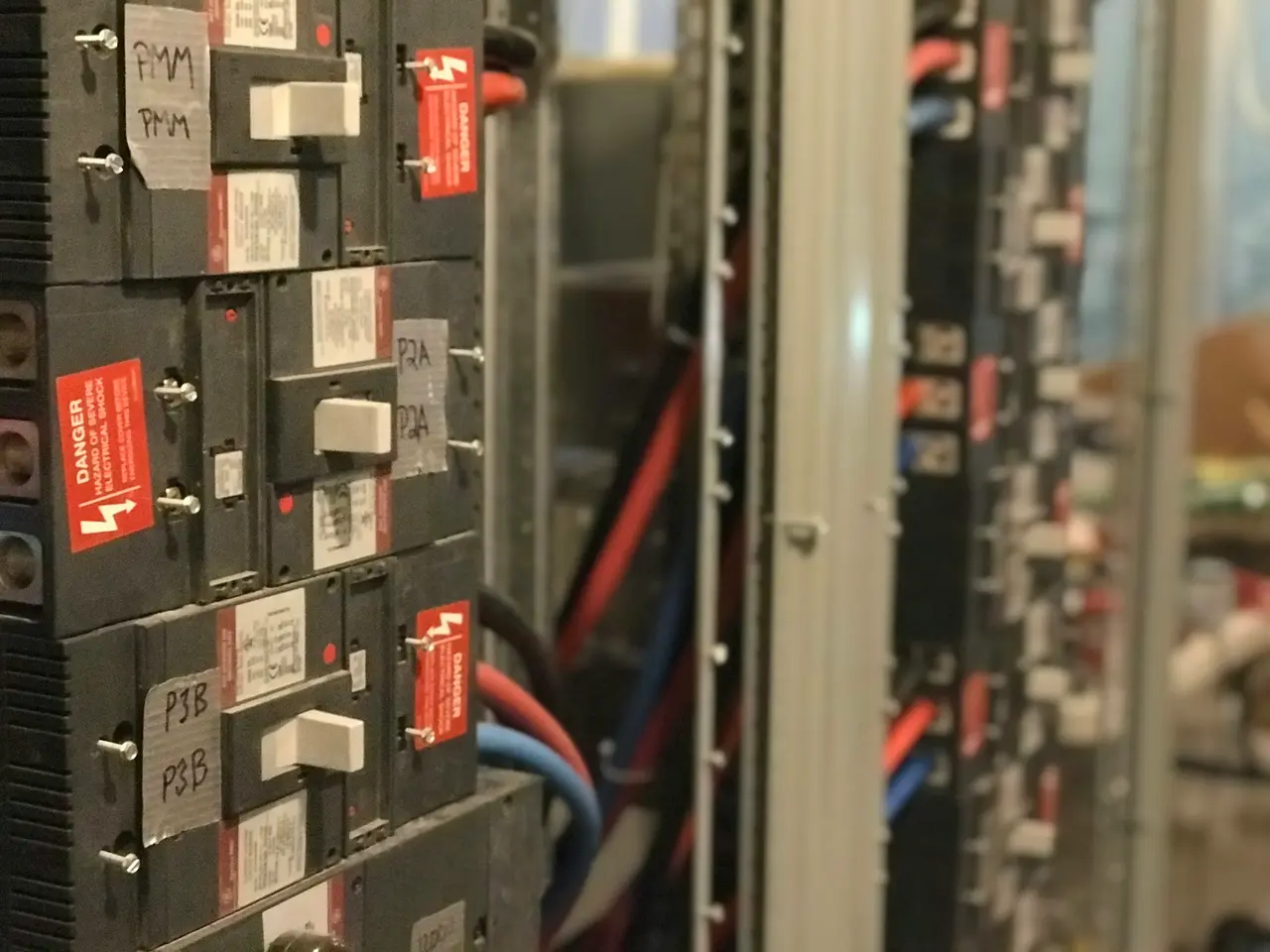
Commercial
Commercial electrical maintenance in the Phoenix Valley
Many electrical failures in commercial buildings start as a loose connection or a breaker that has been running hot for months. Scheduled maintenance finds those problems while they are still cheap to fix, and every visit ends with a written report you can forward to an owner or a board.
Get a free estimate
Tell us what is going on and we will set up a time to look at it.
Or call 602-935-7971
- Infrared scans of panels under load
- Summer heat and monsoon readiness
- Written report after every visit
What's included
- A visit schedule built around each building and its hours
- Infrared scans of panels and disconnects while they carry load
- Connections tightened to spec during a planned shutdown
- Visual checks for rust, heat damage and water in equipment
- GFCI, emergency light and exit sign tests
- Exterior lighting, photocell, time clock and surge protection checks
- Tenant-turn checks of panels, labels and abandoned wiring
- A written report with photos and prioritized repairs
What a maintenance program looks like
A maintenance program is a set schedule of visits, planned around your building, your equipment and your hours. For a single office, one visit a year may be plenty. For a restaurant, a warehouse, a retail center or an apartment property with a lot of exterior lighting, it can make sense to come out in spring ahead of the heat and monsoon season, and again in fall after the storms.
Each visit follows the same checklist, so results can be compared from one year to the next. We look at the main service, panels, disconnects, exterior equipment, lighting, and life-safety items like emergency lights and exit signs. Small fixes can be handled during the visit with your approval. Larger ones go on the report with a written price so you can budget for them.
Infrared scans of panels and equipment
A thermal camera shows heat you cannot see. A loose lug, a failing breaker or an overloaded circuit runs hotter than the parts around it and stands out clearly on the image. The scan only works while the equipment is carrying a normal load, so we schedule it while your building is open and running.
Scanning means removing panel covers on live equipment, which calls for the right training and protective gear, and we treat it that way. Every hot spot goes in the report with the thermal image, a regular photo of the same spot, and what we recommend. Some insurance carriers and lenders ask for infrared scan reports. If yours has, tell us what they want to see and we will include it where we can.
Tightening connections and fixing what the scan finds
Electrical connections loosen over time. In the Valley, part of the reason is heat: equipment warms up and cools down every day, and over many cycles that movement can work connections loose. A loose connection creates resistance, resistance creates heat, and heat makes the connection worse.
Tightening has to be done with the power off, so it gets scheduled as a planned shutdown, usually early in the morning or on a day you are closed. We tighten connections to the manufacturer's specifications, replace damaged breakers, lugs or wire ends, and scan the equipment again once it is back under load to confirm the hot spot is gone.
Getting ready for summer heat and monsoon season
Phoenix summer highs regularly top 110 degrees, and air conditioning runs hard from roughly May through October. Breakers trip at lower loads when they are hot, connections loosen over many heat cycles, and panels and disconnects on west- or south-facing walls bake in the afternoon sun. A spring visit checks the circuits that feed AC equipment and looks for breakers and connections that are already running warm. Finding a hot breaker in April is a scheduled repair. Finding it in July, when the building is full and the AC quits, is an emergency.
Monsoon season runs from June 15 to September 30, as defined by the National Weather Service, and brings lightning, dust storms, high winds, outages and surges. Before it starts, we check for surge protection at the main panel, look for gaps where wind-driven rain can get into exterior equipment, check for rust at the bottom of exterior cabinets, and test emergency lighting so it works during an outage. Panel surge protection works best paired with point-of-use protection, and nothing stops a direct lightning strike.
Portfolios and tenant turns
Property managers with several buildings need results they can compare. We use the same checklist and report format at every property, so you can see which buildings need attention first and plan repairs and budgets across the whole portfolio. Visits can be grouped by area to keep scheduling simple, with shutdown work set for each building on its own closed hours.
Tenant turns are the easiest time to check a suite, because nobody is working in it. We open the panel, test GFCI protection and emergency lighting, look for abandoned or unsafe wiring the last tenant left behind, confirm the panel schedule matches the circuits, and note what the next tenant's build-out may need. The turn report comes with photos and prices, so you know the condition of the space before you show it.
The written report
Every visit ends with a written report. It lists what we checked and what we found, includes photos and thermal images of problem spots, and ranks repairs by urgency: fix now, plan for this year, and keep an eye on.
The report is written for the people who have to act on it. A property manager can forward it to an owner, an HOA manager can put it in front of the board, and a business owner can use it to budget. Repairs are priced separately, so you decide what to approve and when. Over time, the reports build a record of each building and make it easier to spot problems that keep coming back.
When to schedule electrical maintenance
Spring is the most useful time for a visit in the Valley. It catches problems before the summer heat sets in and before monsoon season begins on June 15.
A second visit in the fall, after the storms, is worth it for buildings with heavy equipment loads, a lot of exterior lighting, or a history of electrical problems. It also makes sense to schedule a scan after any big change, such as new equipment, a tenant build-out or a lightning strike nearby, and to check every suite at a tenant turn.
How it works
From the first call to a passed inspection.
01
Call or send plans
Call 602-935-7971, use the estimate form, or email drawings to contact@prcselectrical.com. We ask a few questions and set a time to look.
02
On-site visit
An electrician checks the panel, the service size, the circuits involved and what the utility or inspector will require.
03
Written flat price
You get the scope and the price in writing, including permits, before work starts.
04
Work and inspection
We work to your schedule, after hours when a business needs to stay open, pass inspection and walk you through the finished work.
Why people call Precise Electrical
Findings you can see
Every problem in the report comes with a photo or thermal image, so you can see it for yourself.
Repairs priced separately
Repairs are listed and priced on their own, and you decide what to approve and when.
Planned around your hours
Scans happen while the building runs normally, and shutdowns for tightening are scheduled for early mornings or days you are closed.
Questions about commercial electrical maintenance
What is an infrared scan of an electrical panel?
It is a check with a thermal camera while the panel is carrying a normal load. Loose connections, failing breakers and overloaded circuits run hotter than the parts around them and show up clearly on the image. It finds problems before anything is shut down or taken apart.
How often should a commercial building have electrical maintenance?
Once a year works for many buildings, ideally in spring before the heat and monsoon season. Restaurants, warehouses and properties with heavy equipment or a lot of exterior lighting often benefit from a second visit in the fall. We help you set a schedule that fits the building.
Do you have to shut off power for maintenance?
For part of it. Infrared scans are done with the power on so we can see what is running hot. Tightening connections and replacing parts needs the power off, so we schedule that separately for early morning or a day you are closed.
Can you maintain several properties on one schedule?
Yes. We set a visit calendar across your properties, use the same checklist and report format at each one, and send reports by building so you can compare them. Repairs are priced per property, so each owner or budget can approve its own work.
What does monsoon readiness include?
A check of surge protection at the panel, exterior fixtures and covers, seals where rain can get in, rust on exterior cabinets, emergency lighting, and photocells and time clocks. Monsoon storms bring lightning, wind, dust, outages and surges, so the goal is to find weak spots before the first storm does.
Will we get a written report?
Yes. Every visit ends with a written report showing what we checked, what we found, photos and thermal images of problem spots, and recommended repairs ranked by urgency. It is written so a property manager, owner or HOA board can read it and decide what to do next.
Do you fix the problems you find?
Yes, with your approval. Small items can often be handled during the visit if you sign off. Larger repairs are priced separately in writing, so you can approve them, schedule them for later or get another opinion first.
Can a maintenance program help with insurance?
It may, but we cannot promise any outcome with your carrier. Some insurers and lenders ask for infrared scans or electrical inspection reports. If yours has, tell us what they need to see and we will include it in the report where we can.
Other services
- Dental & medical
- Restaurants
- Retail build-outs
- Office electrical
- Industrial electrical
- Commercial electrical
- Build-outs & renovations
- Commercial lighting
- Panel upgrades
- Electrical repair
- EV chargers
- Rewiring
- Lighting
- Ceiling fans
- Outlets & GFCI
- Surge protection
- Backup power
- Safety inspections
- Emergency electrician
- Pool & spa
The crew
Licensed electricians on every job
The electrician who looks at your job is qualified to do it. We photograph what we find and give you options when there is more than one good fix.
- Arizona ROC licensed and insured
- Photos and written findings on every job
- Permits and inspections handled
- Clean job sites and labeled panels
Arizona ROC License CR-11 #368777 · Look it up
Tell us what you need.
Free estimates, written flat-price quotes and permits handled, anywhere in the Valley.
602-935-7971