
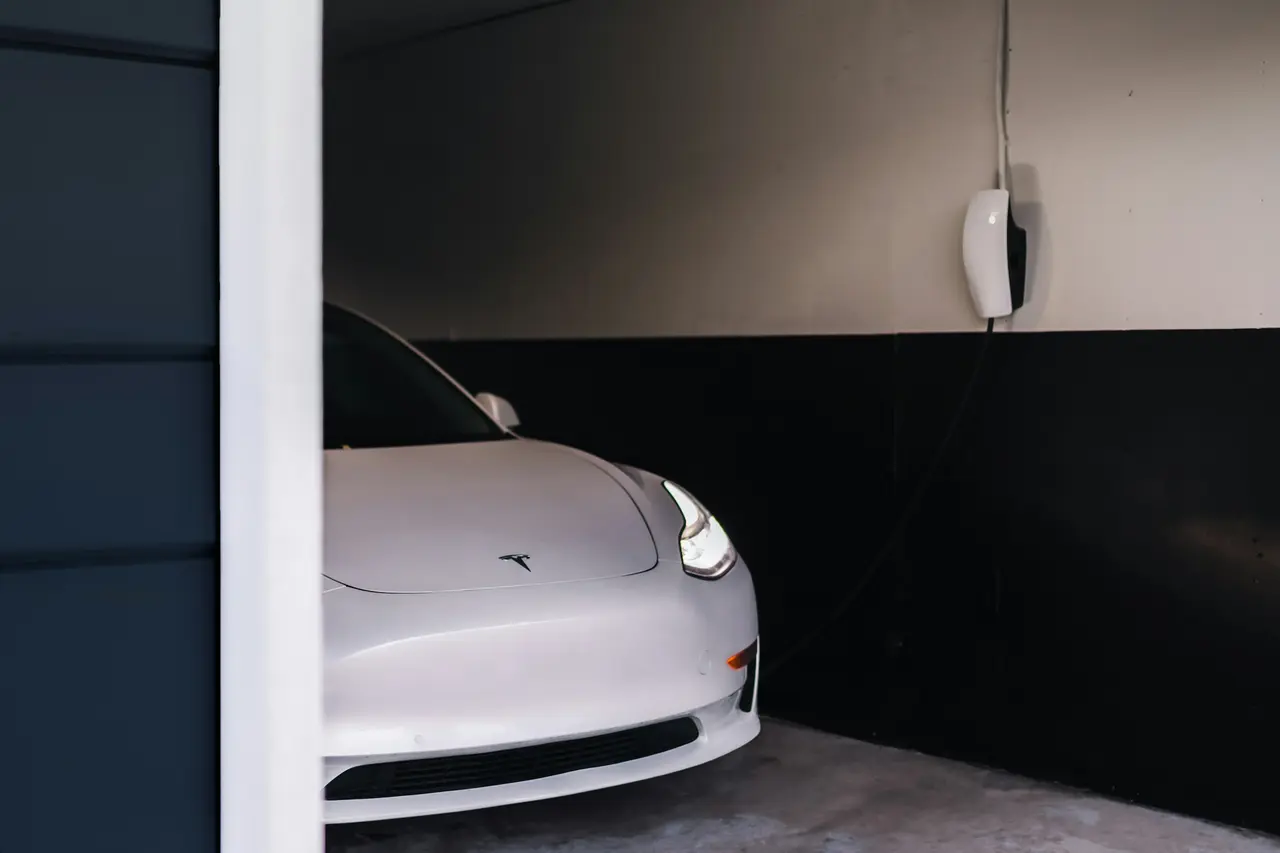
Residential
EV charger installation in the Phoenix Valley
Whether the charger is already in the box or you are still picking one, we check your panel, plan the circuit, and give you a written price for a Level 2 install in your garage or on your driveway.
Get a free estimate
Tell us what is going on and we will set up a time to look at it.
Or call 602-935-7971
- Hardwired or plug-in Level 2
- Panel capacity checked first
- Load management when it helps
What's included
- A panel capacity check and load calculation before we quote
- A dedicated 240V circuit sized to your charger and car
- Hardwired charger mounting or a 240V outlet for a plug-in unit
- Garage, carport or driveway locations with outdoor-rated parts where needed
- Load management options when your panel is close to full
- The permit and inspection when your city or county requires one
- Testing the charger and setup before we leave
Level 2 charging and what your home needs
Most EVs come with a cord that plugs into a regular outlet. That is Level 1 charging, and for many drivers it is too slow to keep up. A Level 2 charger runs on 240 volts, the same kind of circuit as an electric dryer or range, and charges the car much faster.
A Level 2 charger usually needs its own dedicated circuit, often 40 to 60 amps depending on the charger. The right size depends on what the charger can deliver and what your car can accept. There is no point paying for a bigger circuit than the car can use, and we will tell you when a smaller one does the job.
The other half of the question is whether the panel has room for it. That is where we start.
Checking your panel capacity
An EV charger is one of the biggest loads in a house, and in Phoenix it shares the panel with an air conditioner that runs hard from roughly May through October. Before we quote, we look at your service size, the panel's open spaces and what else runs on it, and we do a load calculation.
Homes in newer master-planned communities usually have 200-amp service, which often leaves room for a charger. Older homes with 100-amp service, especially ones with a pool, an electric range and a large AC system, can be tight.
If your panel is a Federal Pacific Stab-Lok or Zinsco, we will recommend dealing with that before adding a large new circuit to it. If you have rooftop solar, we look at how it ties into the panel too.
Load management before a service upgrade
A full panel or service upgrade is not always the answer. A load management device watches how much power the house is using and slows or pauses charging when the total gets close to the limit. Some chargers have this built in. Others use a separate device at the panel.
When it fits your house, the car still charges overnight, and the charger backs off on a hot evening when the AC, oven and dryer all run at once. That can sometimes avoid a service upgrade entirely.
When the load calculation says the house really does need more capacity, we can price both options side by side so you can decide.
Garage and driveway installs in the Valley heat
Most chargers go in the garage, close to the panel if possible, because a shorter wire run usually costs less. If your panel is on the far side of the house, we plan the route through the attic, along the wall or underground, and show you the trade-offs.
Phoenix garages get very hot in summer, so we check the charger's installation instructions and temperature rating against where it will hang. A spot out of direct afternoon sun is worth a few extra feet of wire.
For driveway and carport installs, the charger and every connection need to be rated for outdoor use. Monsoon storms bring wind-driven rain and dust, so we mount the charger where the cable can hang clear of puddles, and we seal every outdoor wall penetration.
Permits, utilities and rate plans
A new 240-volt circuit is new wiring, and building departments generally want to permit and inspect it. Rules vary by city and county, so we check with yours, pull the permit under our ROC license when it is required, and meet the inspector.
Both APS and SRP offer time-of-use and EV-friendly rate plans. Which one makes sense depends on your driving and how your household uses power, and plans change, so check with your utility before you switch. Many chargers, and most EVs, can be set to charge on a schedule, and we can help you set that up before we leave.
If you have solar, ask your solar company how daytime charging fits with your system.
When to install an EV charger
The best time is before the car arrives, so you can charge at home from the first night. Book a panel check as soon as you know which car and charger you are getting. If the load calculation shows you need a load management device or a panel upgrade, that gives you time to plan it.
If you are also thinking about solar, a pool or a bigger AC unit, tell us at the first visit. It is easier, and usually cheaper, to plan for all of it at once than to add capacity twice.
How it works
From the first call to a passed inspection.
01
Call or send plans
Call 602-935-7971, use the estimate form, or email drawings to contact@prcselectrical.com. We ask a few questions and set a time to look.
02
On-site visit
An electrician checks the panel, the service size, the circuits involved and what the utility or inspector will require.
03
Written flat price
You get the scope and the price in writing, including permits, before work starts.
04
Work and inspection
We work to your schedule, after hours when a business needs to stay open, pass inspection and walk you through the finished work.
Why people call Precise Electrical
We check the panel before we quote
You get a load calculation. If a load management device saves you a service upgrade, we say so.
Built for a hot garage or an open driveway
We pick the location, wire route and parts with Phoenix summers and monsoon storms in mind.
A written price, start to finish
Your quote covers the circuit, the mounting, the permit when one is needed, and testing. If something changes on site, we talk to you before doing more.
Questions about EV charger installation
What size circuit does a Level 2 charger need?
Usually a dedicated 240-volt circuit of 40 to 60 amps, depending on the charger. The right size also depends on how fast your car can charge. We size the circuit to the charger, the car and what your panel can handle, so you are not paying for capacity you will not use.
Do I need a panel upgrade for an EV charger?
Not always. Many homes with 200-amp service have room for a charger. Older homes with 100-amp service can be tight, especially with a pool or electric appliances. We do a load calculation first, and a load management device can sometimes avoid a service upgrade.
Is a hardwired or plug-in charger better?
It depends on the charger and where it goes. A plug-in charger on a 240-volt outlet is easy to take with you or swap later. A hardwired charger has no outlet to wear out, and some models only deliver their full output when hardwired. We help you pick based on your charger.
Can you install a charger outside on my driveway?
Yes. The charger, the outlet if there is one, and every connection need to be rated for outdoor use. We mount it where the cable stays clear of standing water, seal the wall penetrations, and plan the spot around monsoon rain, dust and afternoon sun.
Do I need a permit for an EV charger?
In most cases, yes. A new 240-volt circuit is new wiring, and building departments generally permit and inspect it. Requirements vary by city and county, so we check with yours and pull the permit under our ROC license when one is required.
Will my utility give me a special EV rate?
Possibly. Both APS and SRP offer time-of-use and EV-friendly rate plans. The right plan depends on your usage, and the plans change, so check with your utility directly. Once you pick one, we can help set your charger to run on a schedule that matches it.
Can you install a charger I bought online?
Usually, yes. Send us the make and model before the visit so we can check the circuit size and the installation instructions. If it is listed by a recognized testing lab and your panel can support it, we will install it.
Other services
- Panel upgrades
- Electrical repair
- Rewiring
- Lighting
- Ceiling fans
- Outlets & GFCI
- Surge protection
- Backup power
- Safety inspections
- Emergency electrician
- Pool & spa
- Dental & medical
- Restaurants
- Retail build-outs
- Office electrical
- Industrial electrical
- Commercial electrical
- Build-outs & renovations
- Commercial lighting
- Electrical maintenance
The crew
Licensed electricians on every job
The electrician who looks at your job is qualified to do it. We photograph what we find and give you options when there is more than one good fix.
- Arizona ROC licensed and insured
- Photos and written findings on every job
- Permits and inspections handled
- Clean job sites and labeled panels
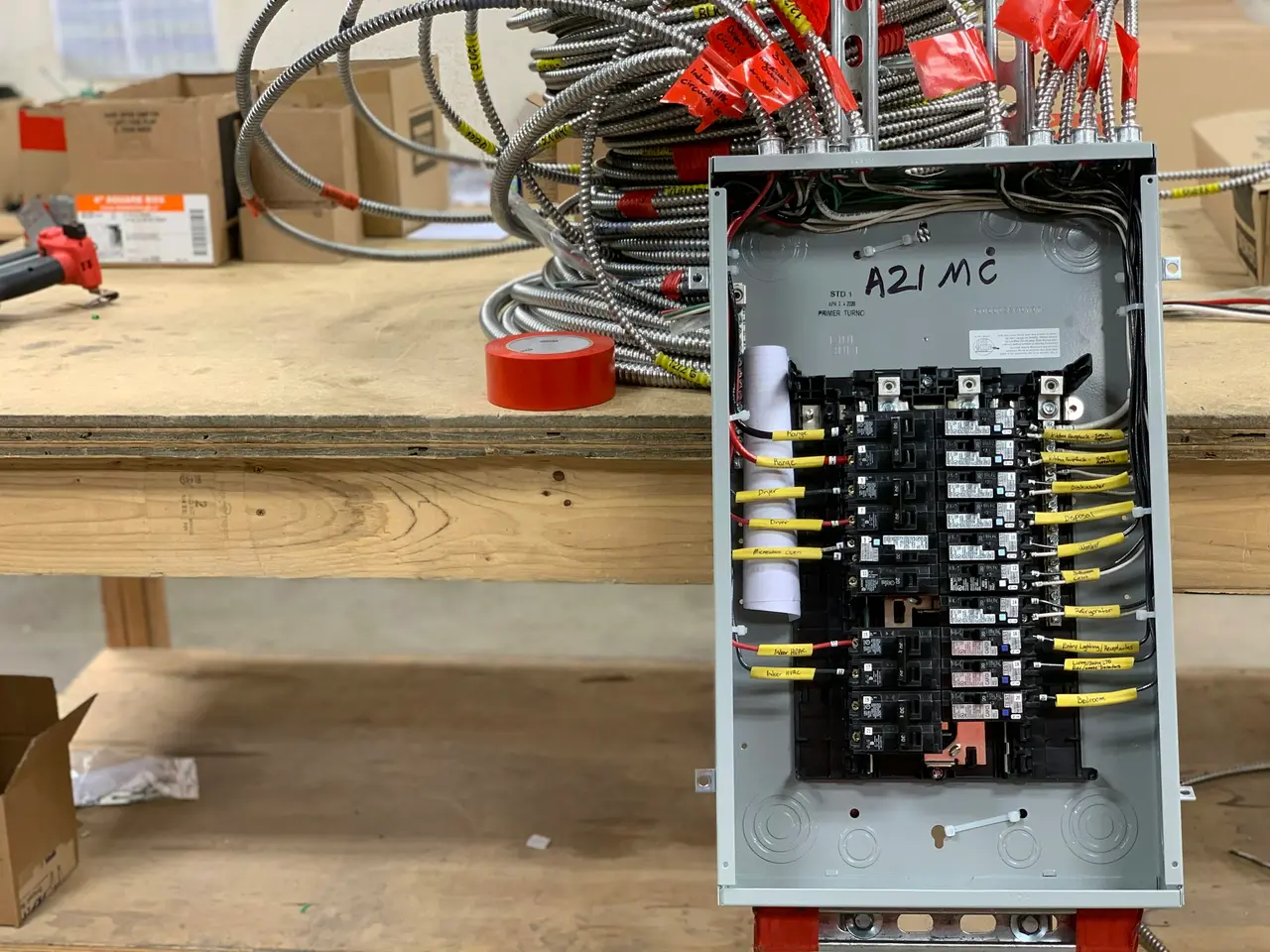
Arizona ROC License CR-11 #368777 · Look it up
Tell us what you need.
Free estimates, written flat-price quotes and permits handled, anywhere in the Valley.
602-935-7971