

Residential
Whole-home surge protection in the Phoenix Valley
Monsoon lightning, utility switching and even your own AC compressor send voltage spikes through your wiring. A surge protective device at the panel limits those spikes before they reach the equipment you paid for.
Get a free estimate
Tell us what is going on and we will set up a time to look at it.
Or call 602-935-7971
- Mounted at your main panel
- Helps shield AC and pool gear
- Point-of-use plan for electronics
What's included
- A look at your panel, grounding and bonding before we recommend a device
- A surge protective device matched to your panel and service
- Installation at the main panel or meter-main with short, direct leads
- Grounding checks, including the Ufer ground on slab homes
- Advice on plug-in protectors for TVs, computers and network gear
- A walk-through of the status lights so you know when it is spent
- Separate protection for pool or detached building subpanels when it makes sense
What a whole-home surge protector does
A surge is a brief spike in voltage, far above the 120 or 240 volts your home is built for. It lasts a fraction of a second, but it can cook the circuit boards inside an AC condenser, a variable-speed pool pump, a refrigerator or a TV.
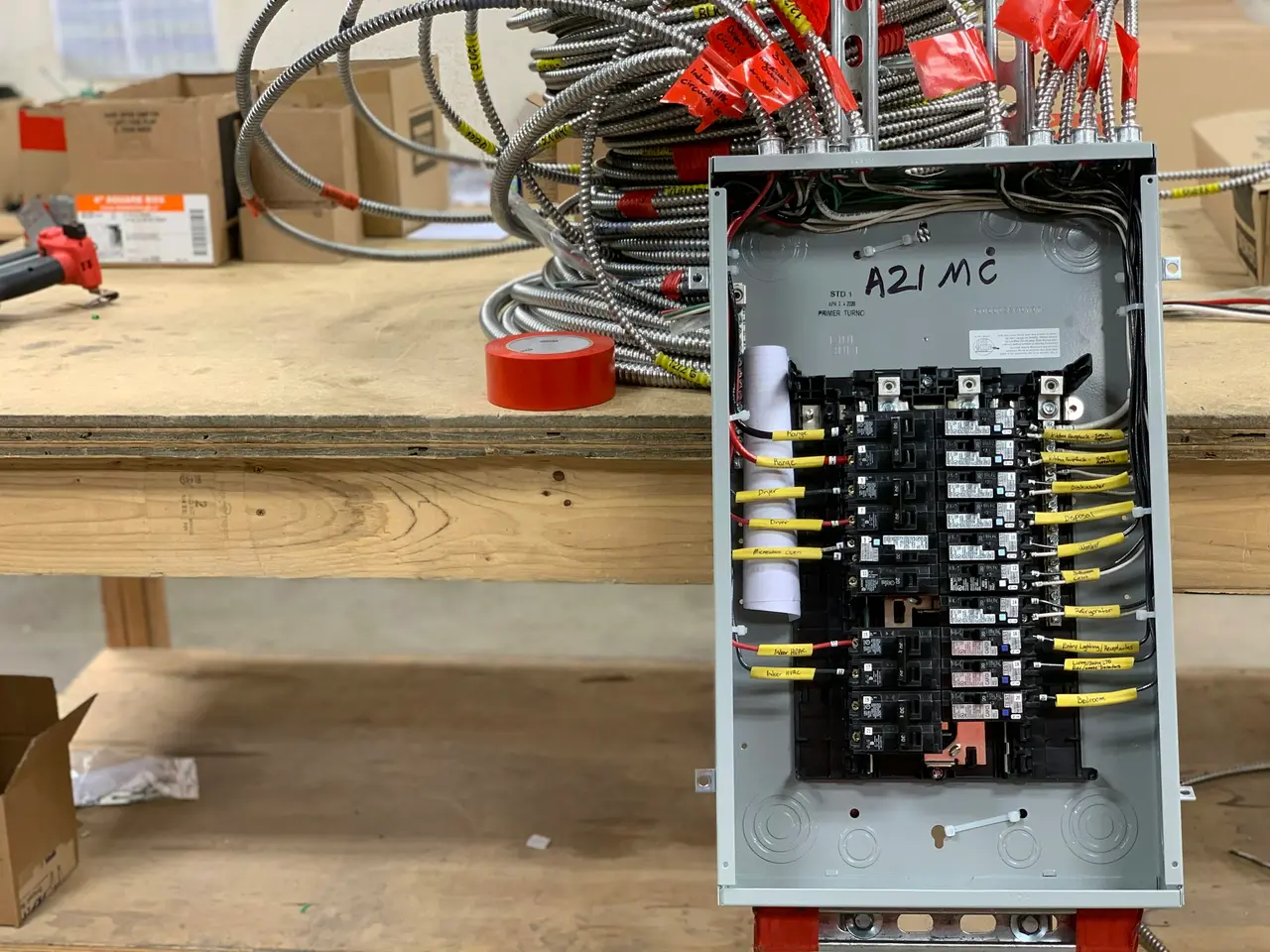
A whole-home surge protector, also called a surge protective device or SPD, mounts at your main panel or meter-main. When voltage spikes, it sends the excess energy to your grounding system instead of letting it run through every circuit in the house. It covers equipment wired to that panel that you could never plug into a power strip, like the AC condenser, the range and the pool equipment.
Many units have indicator lights that show whether the protection is still active. A device that has absorbed a large surge can wear out, so it is worth a glance after a big storm.
Monsoon lightning and utility switching surges
Monsoon season runs from June 15 to September 30, and it brings lightning, dust storms and high winds across the Valley. A strike does not have to hit your house to cause trouble. Lightning that hits a power line, a transformer or the ground nearby can push a surge into your home through the electric service, cable lines or phone lines.
Storms also cause surges you never see. When wind knocks lines together, when a transformer fails, or when APS or SRP switches equipment on the grid to restore power, the voltage on the line can spike. The moment power comes back after an outage can bring a spike of its own, which is one reason to unplug sensitive electronics when the lights go out.
Some surges start inside the house. Large motors like the AC compressor and pool pump create small spikes every time they cycle on and off, and over years of long Phoenix summers those can wear on sensitive electronics.
Protecting AC units, pool equipment and electronics
In many Valley homes, the most expensive equipment on the electrical system is the air conditioner and the pool equipment. Newer AC systems with variable-speed compressors and communicating thermostats rely on control boards, and so do variable-speed pool pumps, heaters and automation panels. Those boards are sensitive to surges, and replacing one in the middle of July is no fun.
Pool equipment pads add their own risk. They sit outdoors, often on their own subpanel at the end of a long wire run that can pick up surges along the way. For homes with a pool subpanel or a detached garage, we may recommend a second protector at that panel. Sometimes one device at the main panel is enough.
Solar inverters, EV chargers and smart appliances also benefit from protection at the panel. If you have solar or plan to add it, we place the surge device so it leaves room for the breakers you will need later.
Why you still need point-of-use protection
A panel-mounted device is the first layer. It brings a big surge down to a level your wiring can handle, but some voltage still gets through. Surges can also come in on cable, internet and phone lines that never pass through the panel at all.
We recommend quality plug-in surge protectors for TVs, computers, gaming systems, routers and anything else with a sensitive circuit board. If your equipment connects to coax or a network cable, look for a protector that covers those lines too. Plug-in protectors wear out like panel units do, so replace them when the protection light goes dark or after a major surge.
The two layers work better together than either one does alone. While we are at your home, we are happy to point out which outlets and devices deserve the plug-in kind.
What surge protection cannot do
Nothing stops a direct lightning strike. If lightning hits your house, a tree next to it or the service lines right at your meter, the energy is far beyond what any residential device is built to handle. A surge protector improves your odds against nearby strikes and everyday grid surges, but it is not a guarantee, and anyone who promises complete protection from lightning is overselling.
It also does not replace good grounding. A surge device needs a solid path to earth to do its job, which is why we check your grounding and bonding first. Many slab homes in Arizona rely on a concrete-encased electrode, known as a Ufer ground, and some older homes have grounding that was never brought up to date.
When a strong storm is on the way, the safest move for your most valuable electronics is still to unplug them before it arrives.
When to add surge protection in Phoenix
The best time is before monsoon season starts on June 15. If you are replacing an AC system or a pool pump this spring, protect the new equipment at the same time instead of after the first storm.
It also makes sense whenever your panel is already open: during a panel upgrade, a solar or battery tie-in, an EV charger install or new pool equipment. And if a storm has already taken out a control board or two, call before the next one rolls in.
How it works
From the first call to a passed inspection.
01
Call or send plans
Call 602-935-7971, use the estimate form, or email drawings to contact@prcselectrical.com. We ask a few questions and set a time to look.
02
On-site visit
An electrician checks the panel, the service size, the circuits involved and what the utility or inspector will require.
03
Written flat price
You get the scope and the price in writing, including permits, before work starts.
04
Work and inspection
We work to your schedule, after hours when a business needs to stay open, pass inspection and walk you through the finished work.
Why people call Precise Electrical
Grounding checked first
A surge device is only as good as the ground it sends energy into. We check your grounding and bonding before we install anything, and fix it if it needs work.
Clear about what it can stop
We will tell you what a panel-mounted protector can and cannot do, including the fact that nothing stops a direct strike. No scare tactics and no overpromising.
Done inside a live panel, done right
Surge protection is installed inside your panel, next to conductors that stay energized. The work is done under our Arizona ROC license, and we check what permits your city requires.
Questions about whole-home surge protection
Is a whole-home surge protector worth it in Phoenix?
Yes, for most homes. Monsoon storms, utility switching and your own AC compressor all cause surges, and Valley homes are full of equipment with control boards. One device at the panel covers hardwired equipment that a power strip cannot. Pair it with plug-in protectors for your electronics.
Will it protect my house from a lightning strike?
No. Nothing stops a direct strike to your house or the service lines at your meter. A whole-home surge protector helps against nearby strikes and the surges that travel in on utility lines. Be wary of anyone who promises complete protection from lightning.
Do I still need power strips with surge protection?
Yes. The panel device knocks a large surge down, but some voltage still passes through, and surges can also come in on cable and internet lines. Plug-in protectors at your TV, computer and router add a second layer right at the equipment.
How long does a whole-home surge protector last?
It depends on how many surges it absorbs. A device can be used up by one large surge or by many small ones. Many panel units have indicator lights that show whether protection is still active. Check them after big storms, and replace the device when the lights say it is spent.
Can you install surge protection on my meter-main?
Usually, yes. Many Arizona homes have an outdoor meter-main, and a surge device can usually be added on a breaker or in a small enclosure right next to it. We check the open spaces, the equipment labels and the grounding before recommending a specific device.
Does surge protection require a permit?
Sometimes. It depends on your city and on whether the work is part of a larger job like a panel upgrade. Newer editions of the electrical code also call for surge protection when a home service is replaced. We check what your city has adopted and pull the permit when one is required.
Will a surge protector lower my electric bill?
No. Surge protection does not change how much power your home uses. Its job is to limit damage to the equipment you already own, like the AC, the pool pump and your appliances, so a storm is less likely to leave you with a repair bill.
Other services
- Panel upgrades
- Electrical repair
- EV chargers
- Rewiring
- Lighting
- Ceiling fans
- Outlets & GFCI
- Backup power
- Safety inspections
- Emergency electrician
- Pool & spa
- Dental & medical
- Restaurants
- Retail build-outs
- Office electrical
- Industrial electrical
- Commercial electrical
- Build-outs & renovations
- Commercial lighting
- Electrical maintenance
The crew
Licensed electricians on every job
The electrician who looks at your job is qualified to do it. We photograph what we find and give you options when there is more than one good fix.
- Arizona ROC licensed and insured
- Photos and written findings on every job
- Permits and inspections handled
- Clean job sites and labeled panels
Arizona ROC License CR-11 #368777 · Look it up
Tell us what you need.
Free estimates, written flat-price quotes and permits handled, anywhere in the Valley.
602-935-7971