

Residential
Generator and battery backup in the Phoenix Valley
When a monsoon storm knocks the power out on a 110-degree evening, the fridge, the fans and any medical equipment matter right away. We wire generators and home batteries so the right circuits stay on and the utility lines stay safe.
Get a free estimate
Tell us what is going on and we will set up a time to look at it.
Or call 602-935-7971
- Transfer switches and interlocks
- Critical-load subpanels
- Solar and battery tie-ins
What's included
- A load review to decide which circuits need backup power
- Transfer switch or listed generator interlock at your panel
- Outdoor inlet box and cord setup for portable generators
- Critical-load subpanel for the circuits you choose
- Electrical hookup for standby generators and home batteries
- Work alongside your solar company on battery tie-ins
- Permit and inspection with your city or county
Monsoon outages and who needs backup power
Monsoon season runs from June 15 to September 30, and the storms that come with it bring high winds, microbursts, dust storms and lightning. Those can take down lines and leave neighborhoods without power, sometimes in the hottest stretch of the year.
For many households an outage is an inconvenience. For others it is a real problem. Think about anyone at home who depends on oxygen or other powered medical equipment, older family members who cannot handle the heat, pets, a freezer full of food, a home office, or a well pump.
If someone in your home relies on medical equipment, ask APS or SRP what support they offer customers in that situation, and keep a plan for where to go if the power stays out. Backup power helps a lot, but it should not be your only plan.
Standby generators, home batteries and portables
There are three common ways to keep power on during an outage, and each one fits a different household.
A standby generator sits outside on a pad, runs on natural gas or propane, and starts on its own when the grid goes down. Sized for it, it can carry a large share of the house, including the AC. A home battery stores power from the grid or from solar and takes over quietly with no fuel to manage. It covers fewer loads for a limited time unless solar can recharge it. A portable generator costs the least up front, but you have to start it by hand, keep it fueled, and connect it through a proper inlet with an interlock or transfer switch.
We help you weigh cost, noise, fuel, run time and what you actually need to keep on, then wire the system you choose.
Why back-feeding a portable generator is dangerous
Plugging a generator into a dryer outlet, or any other outlet, with a homemade double-ended cord is called back-feeding. It is never safe.
Without a transfer switch or interlock, power from your generator can flow out through your meter and onto the utility lines. Transformers can step that voltage up, and a line worker repairing storm damage down the street can be killed by a line they believed was dead. Back-feeding can also overload your house wiring, start a fire, and wreck the generator when grid power comes back.
The fix is simple. A listed interlock or transfer switch makes sure the house is never connected to the grid and the generator at the same time.
Wherever you run a generator, keep it outside and well away from doors, windows and vents. Never run one in a garage, even with the door open, because of carbon monoxide.
Transfer switches, interlocks and critical-load subpanels
Every backup system needs a safe way to move the house from utility power to backup power. For standby generators and many battery systems, that is an automatic transfer switch that senses the outage and changes over on its own. For portable generators, it is usually a manual transfer switch or a listed interlock kit on your main panel, fed from an outdoor inlet box.
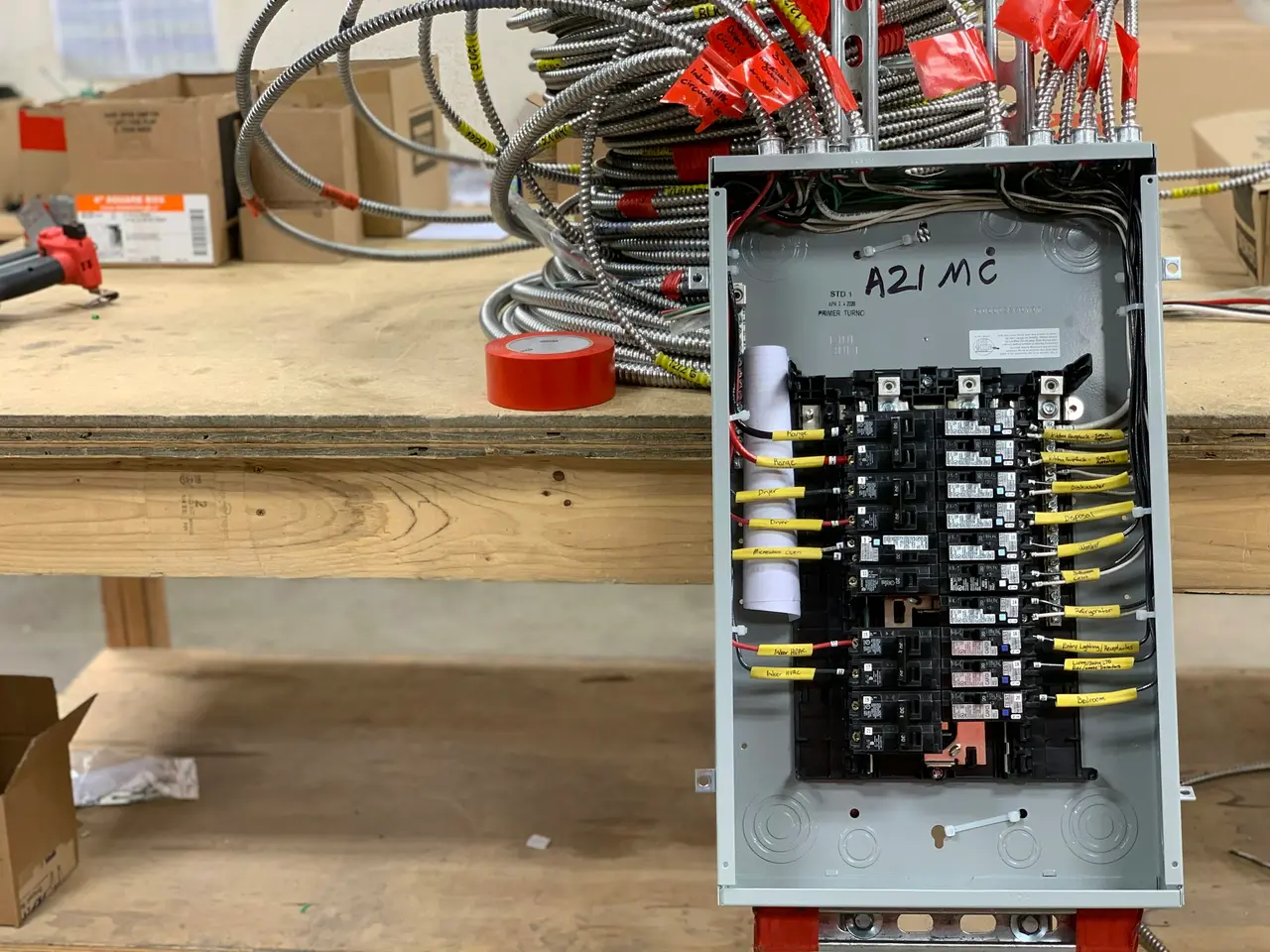
Unless the system is sized for the whole house, we usually move the essential circuits to a critical-load subpanel. Common choices are the refrigerator, some lights, a few outlets, the internet equipment, the garage door opener, a well pump and any medical devices. Everything else stays on the main panel and waits for the grid.
With a portable generator and an interlock, you choose which breakers to turn on and keep the total under what the generator can supply. We label the panel so that is easy to do with a flashlight.
Running AC on backup power in Phoenix heat
In much of the country, backup power means lights and a fridge. In Phoenix in July, people want the air conditioning, and that changes the size of the system.
A central AC compressor draws a large rush of current when it starts. Keeping it running takes a standby generator sized for it, or a battery system with enough output and storage. A soft-start device on the compressor can sometimes cut that starting load enough to make a smaller system work. Because it goes on the AC unit, we confirm it suits your equipment first.
Heat matters for the backup equipment too. Generators lose some output in very hot weather, and batteries have temperature limits set by the manufacturer. A battery on a west-facing garage wall can run hotter than its label allows. We plan placement with summer temperatures in mind and size systems with some margin.
Solar plus battery tie-ins
Many people expect solar to keep the lights on in an outage. A standard grid-tied system does not. It shuts off when the grid goes down so it cannot send power onto lines that crews are working on. To use your solar during an outage, you need a battery and equipment designed to separate your home from the grid.
Solar has to be approved by APS or SRP before it is connected, and adding a battery often means updating that approval. The bus rating and main breaker of your panel limit how much solar can feed into it, and a battery can add to that calculation.
We work alongside your solar company on the electrical side: panel upgrades, backup subpanels, main breaker changes and the wiring between your panel and the battery equipment. If your panel is too small, or it is a Federal Pacific or Zinsco, we will tell you before the battery goes in.
When to plan backup power before monsoon season
Start in winter or early spring. Standby generators and batteries can take time to source, permit and install, and you want the system in place before June 15, ahead of the first outage.
If you already own a portable generator, an interlock or transfer switch is a smaller job, but it still needs to be done before the storms. And if you are upgrading your panel now, it is smart to plan the space and wiring for a battery, even if the battery comes later.
How it works
From the first call to a passed inspection.
01
Call or send plans
Call 602-935-7971, use the estimate form, or email drawings to contact@prcselectrical.com. We ask a few questions and set a time to look.
02
On-site visit
An electrician checks the panel, the service size, the circuits involved and what the utility or inspector will require.
03
Written flat price
You get the scope and the price in writing, including permits, before work starts.
04
Work and inspection
We work to your schedule, after hours when a business needs to stay open, pass inspection and walk you through the finished work.
Why people call Precise Electrical
Safety before convenience
We will not connect a generator without a transfer switch or listed interlock. Protecting your family and the line crews comes ahead of everything else.
Sized for Phoenix summers
We plan around the AC, the heat and the circuits you truly cannot do without, so the system you buy matches the outage you are preparing for.
Permitted and inspected
Backup power connects to your electrical service. We pull the required permits under our Arizona ROC license and schedule the inspection with your city or county.
Questions about generators & battery backup
Can I plug my generator into a dryer outlet?
No. That is back-feeding, and it can send power onto utility lines where it can injure or kill a line worker. It can also overload your wiring and start a fire. Use a listed interlock or transfer switch with a proper inlet, and keep the generator outside, away from doors and windows.
What is the difference between an interlock and a transfer switch?
Both keep your house from being connected to the grid and the generator at once. An interlock is a mechanical plate on your main panel that lets either the main breaker or the generator breaker be on, never both. A transfer switch is a separate device, manual or automatic, that switches selected circuits or the whole house.
Will my solar panels keep the power on during an outage?
Not by themselves. A standard grid-tied solar system shuts down when the grid does, so it cannot feed lines that crews are working on. To use solar in an outage, you need a battery and equipment designed to separate your home from the grid. We handle the electrical tie-in.
Can a generator or battery run my air conditioner?
Yes, if it is sized for it. Central AC draws a big rush of current when the compressor starts, so it takes a larger generator or a battery system with enough output. A soft-start device can sometimes help a smaller system handle it. We look at your actual AC equipment before recommending anything.
Do I need a permit for a generator or battery?
Usually, yes. Standby generators, transfer switches, interlocks and battery systems all connect to your electrical service, and that kind of work typically needs a permit and inspection. Batteries tied to solar also go through the utility. We pull the permit under our ROC license and schedule the inspection.
What should go on a critical-load subpanel?
Usually the refrigerator, a few lights and outlets, the internet equipment, the garage door opener and any medical devices. Some homes add a freezer, a well pump or a small AC unit for one room. We look at what the backup system can supply and help you choose circuits that fit inside it.
Is a home battery better than a standby generator?
It depends on what you need. A battery is quiet, needs no fuel and pairs well with solar, but it covers fewer loads for a limited time. A standby generator can run more of the house for longer, as long as it has fuel. We will lay out the trade-offs for your home.
Does my HOA need to approve a standby generator?
Often, yes. Many master-planned communities in the Valley have rules about outdoor equipment, placement and screening. Check with your HOA early, because their approval can take longer than the electrical work. We can give you the equipment details and location to include with your request.
Other services
- Panel upgrades
- Electrical repair
- EV chargers
- Rewiring
- Lighting
- Ceiling fans
- Outlets & GFCI
- Surge protection
- Safety inspections
- Emergency electrician
- Pool & spa
- Dental & medical
- Restaurants
- Retail build-outs
- Office electrical
- Industrial electrical
- Commercial electrical
- Build-outs & renovations
- Commercial lighting
- Electrical maintenance
The crew
Licensed electricians on every job
The electrician who looks at your job is qualified to do it. We photograph what we find and give you options when there is more than one good fix.
- Arizona ROC licensed and insured
- Photos and written findings on every job
- Permits and inspections handled
- Clean job sites and labeled panels
Arizona ROC License CR-11 #368777 · Look it up
Tell us what you need.
Free estimates, written flat-price quotes and permits handled, anywhere in the Valley.
602-935-7971