

Residential
Whole-home rewiring in the Phoenix Valley
If your home has two-prong outlets, cloth-covered wire, aluminum branch circuits or knob-and-tube, we check what is in the walls and give you a written plan to rewire it all at once or in stages.
Get a free estimate
Tell us what is going on and we will set up a time to look at it.
Or call 602-935-7971
- Cloth, aluminum and knob-and-tube
- Partial and staged rewires
- Permitted and inspected
What's included
- An inspection of the existing wiring, with photos of what we find
- A written plan for a full, partial or staged rewire
- New grounded circuits for outlets, lights and appliances
- Replacement of cloth, knob-and-tube and ungrounded circuits
- Aluminum branch wiring replaced or repaired with approved connectors
- GFCI and AFCI protection where the code your city has adopted requires it
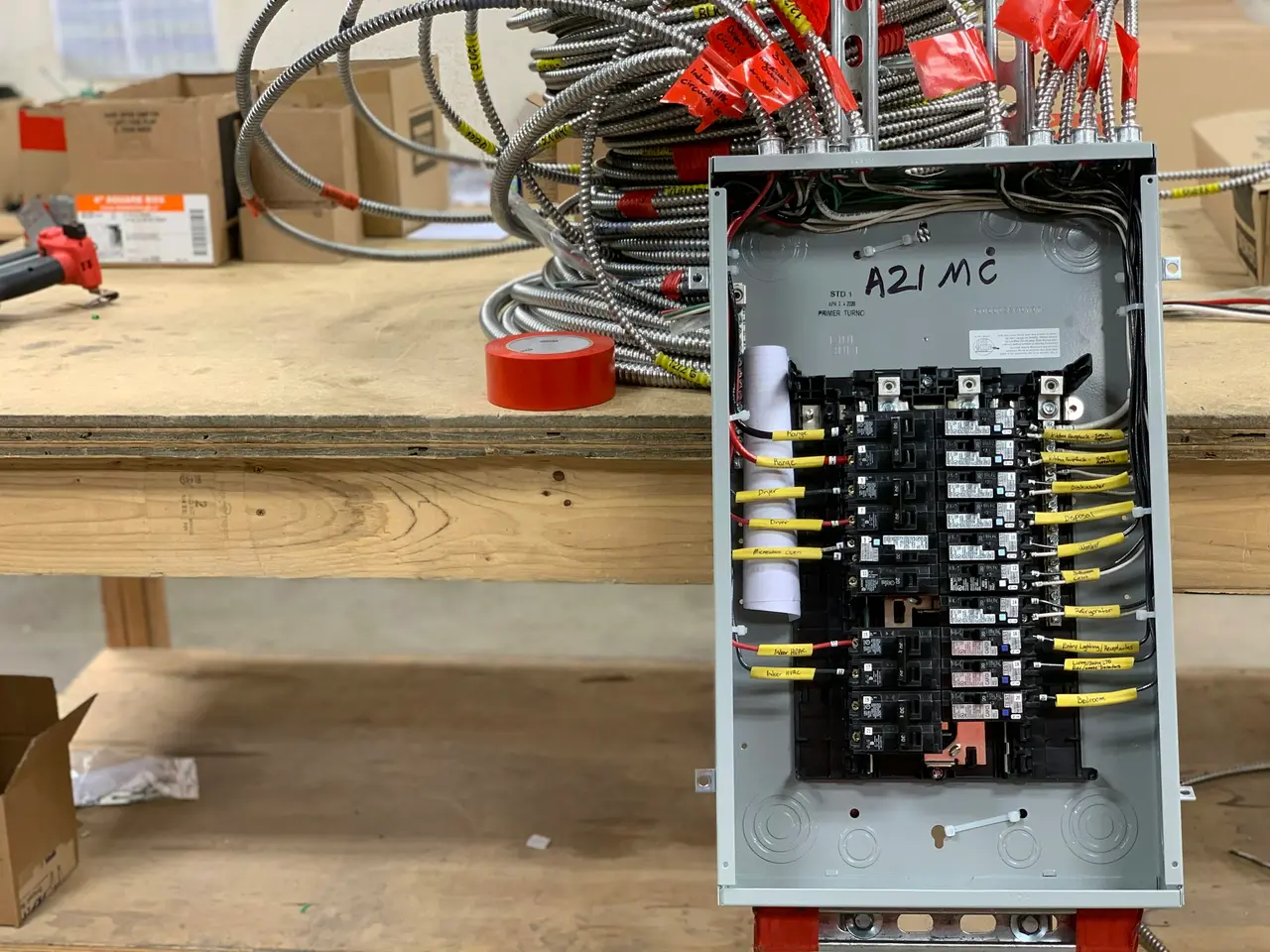
- The permit, the inspections and a labeled panel
Signs your home needs rewiring
Old wiring rarely fails all at once. It wears out a little at a time, and the signs show up as small annoyances that are easy to live with.
Age alone is not the reason to rewire. A 1950s house with sound wiring and a few updated circuits may not need it. A house where the insulation is cracking off the wire, or where three owners have added circuits their own way, probably does. We open boxes, look in the attic and at the panel, and tell you which one you have.
- Two-prong outlets with no ground in most rooms
- Cloth-covered or brittle wire in boxes or the attic
- Lights that dim or flicker on several circuits
- Outlets or switch plates that feel warm
- Breakers that trip often on ordinary loads
- Wiring that looks spliced together from several different eras
Older central Phoenix homes
The historic districts in central Phoenix, like Willo, Encanto-Palmcroft, Coronado, F.Q. Story and Roosevelt, are full of homes built from the 1920s through the 1950s. Inside the walls you can find cloth-insulated wire, two-prong ungrounded outlets, rewiring done one room at a time over decades, and occasionally knob-and-tube.
Knob-and-tube was a reasonable system when it went in, but it has no ground, its insulation gets brittle with age and heat, and it was never meant to sit buried under modern attic insulation or carry the loads a house has today. Cloth-insulated wire has many of the same problems.
Rewiring these homes takes patience. We plan wire routes to save as much of the original plaster and trim as we can, and we walk you through where the openings will be before work starts.
Aluminum wiring in 1960s and 1970s homes
Some Valley homes built roughly 1965 to 1973 were wired with aluminum branch circuits instead of copper. The main concern is the connections. The CPSC has documented a fire risk where aluminum wire connects to outlets, switches and splices, and warm or discolored outlets are a common warning sign.
There are two ways to deal with it. One is rewiring the affected circuits with copper. The other is an approved repair, such as COPALUM crimps or AlumiConn connectors, that joins a short copper lead to the aluminum at every connection point. The repair can cost less and disturb fewer walls. Rewiring is the more complete fix.
We price both options, so you can choose what fits your house and your budget.
Full, partial and staged rewires
Not every house needs to be rewired top to bottom in one job, so we give you options.
A full rewire replaces every branch circuit and often goes with a new panel. It is the most disruptive option, but you finish with one consistent system and a clean set of labels.
A partial rewire targets the circuits that need it most. Kitchens, bathrooms, bedrooms and any circuit with failing insulation usually go first. The rest of the house stays as it is until it makes sense to do more.
A staged rewire spreads the full job over several phases. That can help with budget, or let you live in the house while we work one area at a time. We write out the stages in order so each phase leaves the house safe and working.
How we rewire a slab home
With no crawlspace under a slab home, new wire comes down from the attic into the walls. We fish wire through existing wall cavities where we can and cut small, planned openings where we cannot. Exterior walls and long horizontal runs take the most work.
Valley attics get dangerously hot in summer, so from late spring through early fall we schedule attic work for early in the day. It is safer for the crew and keeps the job moving.
A full rewire often goes with a panel replacement and grounding updates. Many slab homes in Arizona use a concrete-encased electrode, often called a Ufer ground, and we check that connection while we are there. We pull the permit under our ROC license and schedule every inspection the job requires.
When to plan a rewire
Before you move in is the easiest time. An empty house means faster work, fewer belongings to protect, and no one living without power to a room. If you are buying an older home, have the wiring looked at during your inspection period so you can plan for it.
If you already live there, fall through spring is the most comfortable time for attic work. If you have warm outlets, burning smells or wire with crumbling insulation, do not wait for cooler weather. Call us and we will make the worst circuits safe first.
How it works
From the first call to a passed inspection.
01
Call or send plans
Call 602-935-7971, use the estimate form, or email drawings to contact@prcselectrical.com. We ask a few questions and set a time to look.
02
On-site visit
An electrician checks the panel, the service size, the circuits involved and what the utility or inspector will require.
03
Written flat price
You get the scope and the price in writing, including permits, before work starts.
04
Work and inspection
We work to your schedule, after hours when a business needs to stay open, pass inspection and walk you through the finished work.
Why people call Precise Electrical
We show you what is in the walls
You get photos of what we find in boxes, the attic and the panel, so you can see why we recommend what we do.
Options priced side by side
When it makes sense, we price a full rewire alongside a partial or staged one and explain the trade-offs of each.
Permitted under our ROC license
Rewiring is permitted and inspected through your city or county. You get the permit number and the inspection results.
Questions about whole-home rewiring
How do I know if my house has knob-and-tube wiring?
Look for single wires running on white ceramic knobs and passing through ceramic tubes in the framing. In a Valley home, the attic is usually the easiest place to check. If you are not sure what you are looking at, we can check during a visit and take photos of what we find.
Is aluminum wiring dangerous?
It can be. The CPSC has documented a fire risk at aluminum branch-circuit connections in homes built roughly 1965 to 1973. The fix is either rewiring with copper or an approved repair, like COPALUM crimps or AlumiConn connectors, at every connection. We can check which one fits your home.
What is cloth-insulated wiring?
It is older wiring with a fabric outer covering, found in many homes built from the 1920s through the 1950s. The cloth and the insulation under it get brittle with age and heat, and these circuits often have no ground. We check its condition to see if it needs replacing now or can be planned for later.
Do I have to rewire the whole house at once?
No. Many homes do well with a partial rewire of the worst circuits, or a staged rewire done over several phases. We write a plan that puts the most important circuits first and leaves the house safe and working after each stage.
Will rewiring damage my walls?
There will be some openings. We fish wire through existing walls from the attic where we can and cut small, planned openings where we cannot. We point out where they will be before work starts, and we talk through patching and painting so you know what to plan for.
Can I stay in the house during a rewire?
Often, yes, especially with a staged rewire. Some rooms will be without power for part of a day while we work on them. A full rewire goes faster in an empty house, so if you are between moves, that is the best time to do it.
Do I need a new panel when I rewire?
Often, but not always. If your panel is old, too small for the new circuits, or a Federal Pacific or Zinsco, replacing it during the rewire makes sense. If it is in good shape with room to spare, we can connect the new circuits to it.
Other services
- Panel upgrades
- Electrical repair
- EV chargers
- Lighting
- Ceiling fans
- Outlets & GFCI
- Surge protection
- Backup power
- Safety inspections
- Emergency electrician
- Pool & spa
- Dental & medical
- Restaurants
- Retail build-outs
- Office electrical
- Industrial electrical
- Commercial electrical
- Build-outs & renovations
- Commercial lighting
- Electrical maintenance
The crew
Licensed electricians on every job
The electrician who looks at your job is qualified to do it. We photograph what we find and give you options when there is more than one good fix.
- Arizona ROC licensed and insured
- Photos and written findings on every job
- Permits and inspections handled
- Clean job sites and labeled panels
Arizona ROC License CR-11 #368777 · Look it up
Tell us what you need.
Free estimates, written flat-price quotes and permits handled, anywhere in the Valley.
602-935-7971