

Commercial
Retail build-out electrical contractor in Phoenix
We take retail spaces from vanilla shell to opening day: storefront and sign circuits, track and display lighting, power for registers and security, and the permit and inspections in between. We work to the landlord's criteria and the center's working hours, for one store or a rollout across the Valley.
Get a free estimate
Tell us what is going on and we will set up a time to look at it.
Or call 602-935-7971
- Built to landlord tenant criteria
- Repeatable for multi-site rollouts
- Storefront, display and sign circuits
What's included
- Review of the lease work letter and landlord tenant criteria
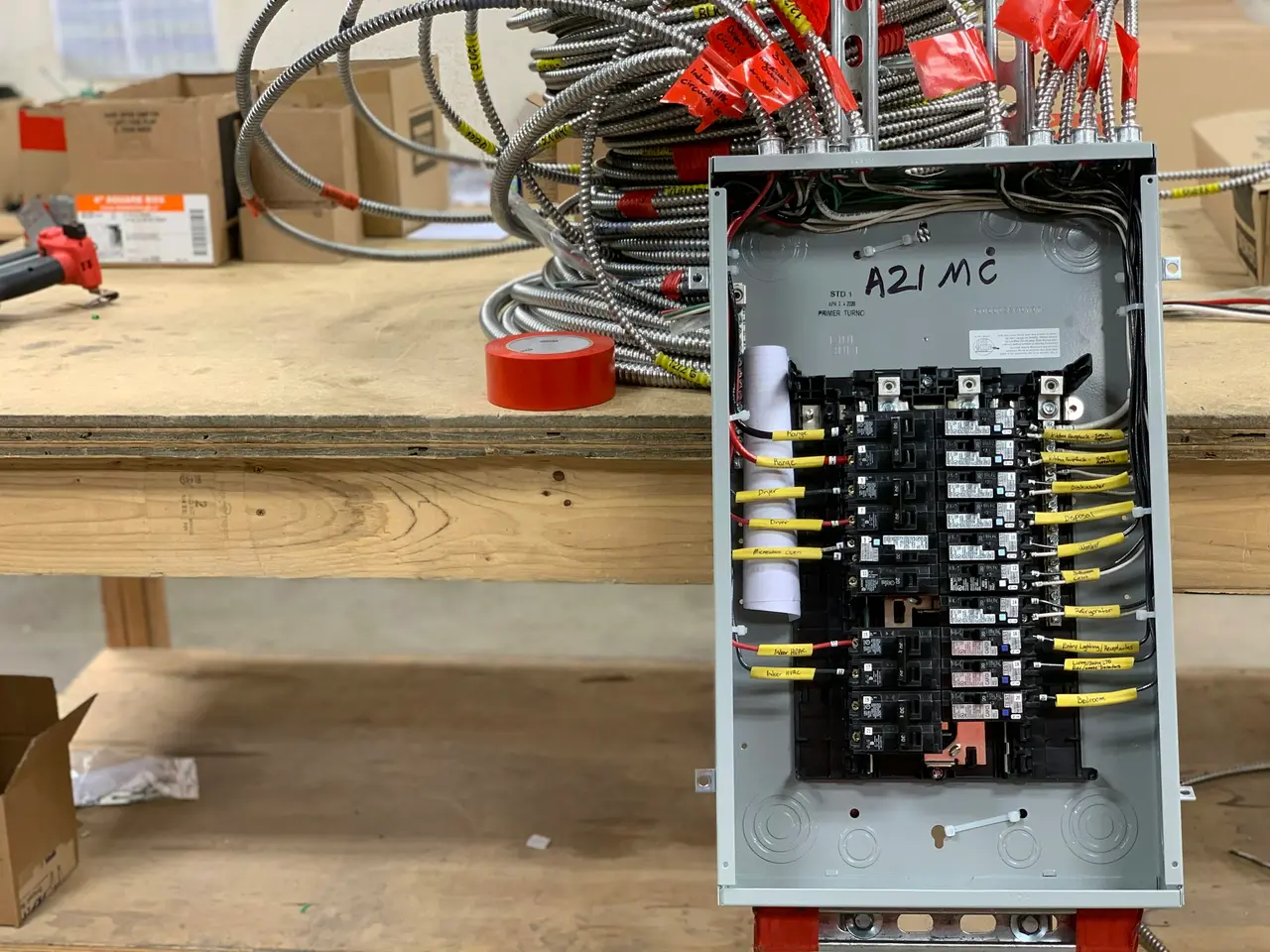
- Panels, subpanels and circuits from the delivered shell to your layout
- Storefront, show window and sign circuits with time clocks
- Track, display and casework lighting with controls
- Dedicated circuits and floor boxes for POS and cash wraps
- Power and pathways for security, anti-theft and network equipment
- Work scheduled within mall or center working hours
- Closeout package with panel schedules and as-builts
From vanilla shell to finished store
Landlords deliver retail space in different conditions, and "vanilla shell", "white box" and "cold dark shell" mean different things in different leases. One space has a panel, a few lights and taped drywall. Another has a meter base and a conduit stubbed into the back wall. The lease work letter spells out what the landlord provides and what the tenant builds, and the electrical scope starts there.
We read the work letter and walk the space before we price it. We confirm the service size and voltage the landlord delivered, check whether the panel is new or left from a prior tenant, and note what has to be added to reach the layout on your plans. When some of the electrical is landlord work and some is tenant work, we price them as separate line items so each party pays its share and the TI allowance paperwork stays clean. Smaller stores without electrical drawings can be done design-build, and when the city requires stamped plans, we work with your engineer or bring one in.
Landlord criteria and center rules
Every center has its own tenant criteria, and the landlord usually has to approve the plans before they go to the city. Electrical items in those criteria often include where meters and panels can go, whether storefront signs must run on a center time clock, which fire alarm vendor handles tie-ins, who is allowed on the roof, and when a shutdown that affects other tenants is allowed.
Enclosed malls usually limit noisy work, deliveries and shutdowns to before the mall opens or after it closes, and they may require a barricade at the storefront during construction. Strip and power centers are often more relaxed, but a shutdown of a shared panel or house circuit still needs the property manager's approval and notice to the neighboring tenants. We build those rules into the schedule from the start, and we work overnight or on closed days when the center requires it.
Storefront, show windows and signs
The storefront is the first thing customers see, and it has its own code rules. The NEC generally requires a sign outlet at each tenant entrance in commercial buildings that pedestrians use. Show windows have their own receptacle requirement, with outlets near the top of the window for display lighting. We place those during rough-in so the window display does not end up on extension cords.
Most centers control when tenant signs turn on and off, through a center time clock or a rule in the criteria. We run the sign circuit to the location on the sign drawings, add the time clock or photocell the criteria call for, and coordinate the connection with your sign company. The sign goes through its own permit, usually pulled by the sign company. If the sign is going up before the store opens, we make sure its circuit is live and labeled in time.
Track, display and casework lighting
Retail lighting is part of the merchandising. Track heads light the walls and feature tables, lit casework and shelving pick out product, and the general lighting sets the brightness of the whole floor. Track runs need enough circuits for the heads the store planner has in mind, plus room for the next reset. Lit fixtures and casework from the millwork shop arrive with their own drivers and connection points, and we confirm those locations before the fixtures land.
Commercial energy codes cap how much lighting power a space can use, and they generally allow an extra amount for merchandise display. They also require controls, such as automatic shutoff after hours. The exact rules depend on the code your city has adopted, and the lighting design on stamped plans has usually been checked against them. We install to the design, set up the controls and time schedules, and show the store manager how to adjust them.
Power for registers, security and the back office
Point-of-sale equipment needs dedicated circuits at the cash wrap. When the cash wrap sits in the middle of the floor, that means floor boxes or poke-throughs, and their locations have to match the fixture plan closely. We confirm them against the fixture drawings before we core or trench the slab.
Security and network equipment need power in specific places too: the camera recorder and network rack in the back office, card readers at doors, and anti-theft pedestals at the entrance, which may need conduit in the floor. Cabling for cameras, data and phones belongs to your low-voltage or IT vendor. We coordinate with them on the plans and give them the power, boxes, conduit and pull strings they need, so their crew is not cutting into finished walls the week before opening.
Franchise and multi-site rollouts
Retail brands opening several stores in the Valley want each one built the same way. We work from the brand prototype and the site-specific plans for each location, keep the circuit numbering and panel schedule format consistent, and turn in the closeout package in the format your construction manager uses. Questions answered on the first store go into our notes for the next one.
What changes from site to site is the building and the paperwork. A rollout across the Valley can cross several permit offices, from Phoenix and Mesa to Gilbert, Glendale and Pinal County, each with its own submittal process and inspection scheduling. Most sites are served by APS or SRP, but parts of Mesa are on the city's own electric utility, and parts of the city of Maricopa are served by ED3. We track those differences by site so your opening dates reflect them.
When to bring an electrician into a retail build-out
During lease negotiation, if you can. A look at the delivered service and panel tells you whether the space can handle your lighting and equipment, and whether an upgrade belongs in the landlord's work or your budget. That is easier to settle before the lease is signed.
Once plans are drawn, bring us in at bid time and give us the target opening date. Retail schedules usually back up from a fixed date for fixture installation, merchandise delivery and staff training, and the electrical final has to pass before the certificate of occupancy. We build our rough-in and inspection dates to that schedule. Send the plans and tenant criteria to contact@prcselectrical.com or call 602-935-7971.
How it works
From the first call to a passed inspection.
01
Call or send plans
Call 602-935-7971, use the estimate form, or email drawings to contact@prcselectrical.com. We ask a few questions and set a time to look.
02
On-site visit
An electrician checks the panel, the service size, the circuits involved and what the utility or inspector will require.
03
Written flat price
You get the scope and the price in writing, including permits, before work starts.
04
Work and inspection
We work to your schedule, after hours when a business needs to stay open, pass inspection and walk you through the finished work.
Why people call Precise Electrical
Landlord work priced separately
When a space has both landlord and tenant electrical work, we price them as separate line items so the TI allowance draw is easy to document.
Center rules built into the schedule
Mall hours, shutdown approvals and sign time clocks are part of our plan from day one, so the property manager has no reason to stop the job.
Consistent from store to store
Rollouts get the same circuit layout, panel schedule format and closeout package at every location, adjusted for each building.
Questions about retail build-out electrical
What does vanilla shell mean for the electrical?
It depends on the lease. A vanilla shell often includes a panel and basic lighting, while a cold dark shell may have only a service stub. The work letter defines what the landlord delivers. We read it, walk the space, and price what it takes to get from that condition to your plans.
Can you price landlord work and tenant work separately?
Yes. When the lease splits the electrical scope, we price landlord items and tenant items as separate line items and invoice them the same way. That makes a TI allowance draw easier to document, since landlords often release the allowance only after they receive final invoices, lien waivers and the certificate of occupancy.
Can you work within mall hours and center rules?
Yes. We schedule noisy work, deliveries and shutdowns around the center's rules, which in enclosed malls usually means before opening or after closing. Shutdowns of shared panels or house circuits go through the property manager first, with notice to neighboring tenants.
Do you handle multi-location franchise rollouts?
Yes, across the Phoenix Valley. We build each store from the brand prototype and the site plans, keep the circuit layout and panel schedule format consistent, and adjust for each building's service, utility and permit office. For vendor setup, our Arizona ROC license is #368777, class CR-11.
Do you install security cameras or data cabling?
No. Camera, data and phone cabling goes to your low-voltage or IT vendor. We provide dedicated circuits for the recorder, network rack and registers, power for anti-theft pedestals and card readers, and the boxes, conduit and pull strings that vendor needs, coordinated on the plans.
How fast can a retail build-out be done?
It depends on the size of the space, permit review time and the other trades. Electrical is one part of the schedule. Once we see the plans and the target opening date, we give the GC a realistic timeline for rough-in, inspections and trim, and keep them updated if a date outside our control moves.
How do you handle change orders?
In writing, before the work. Retail plans often change late, when the fixture plan is revised or the landlord comments on the drawings. We price each change, note how it affects the schedule, and do the work once the GC or owner approves it, so the final invoice matches the approved scope.
What is in the closeout package?
Typed panel schedules, marked-up drawings showing where circuits, floor boxes and sign connections ended up, the permit and inspection record, and lighting control settings. For franchise rollouts, we can follow the brand's closeout checklist. The landlord also gets an accurate record of what was built in the space.
Related guides
Other services
- Dental & medical
- Restaurants
- Office electrical
- Industrial electrical
- Commercial electrical
- Build-outs & renovations
- Commercial lighting
- Electrical maintenance
- Panel upgrades
- Electrical repair
- EV chargers
- Rewiring
- Lighting
- Ceiling fans
- Outlets & GFCI
- Surge protection
- Backup power
- Safety inspections
- Emergency electrician
- Pool & spa
The crew
Licensed electricians on every job
The electrician who looks at your job is qualified to do it. We photograph what we find and give you options when there is more than one good fix.
- Arizona ROC licensed and insured
- Photos and written findings on every job
- Permits and inspections handled
- Clean job sites and labeled panels
Arizona ROC License CR-11 #368777 · Look it up
Tell us what you need.
Free estimates, written flat-price quotes and permits handled, anywhere in the Valley.
602-935-7971